
Online ordering is temporarily disabled. Contact us for product availability and purchase inquiries.
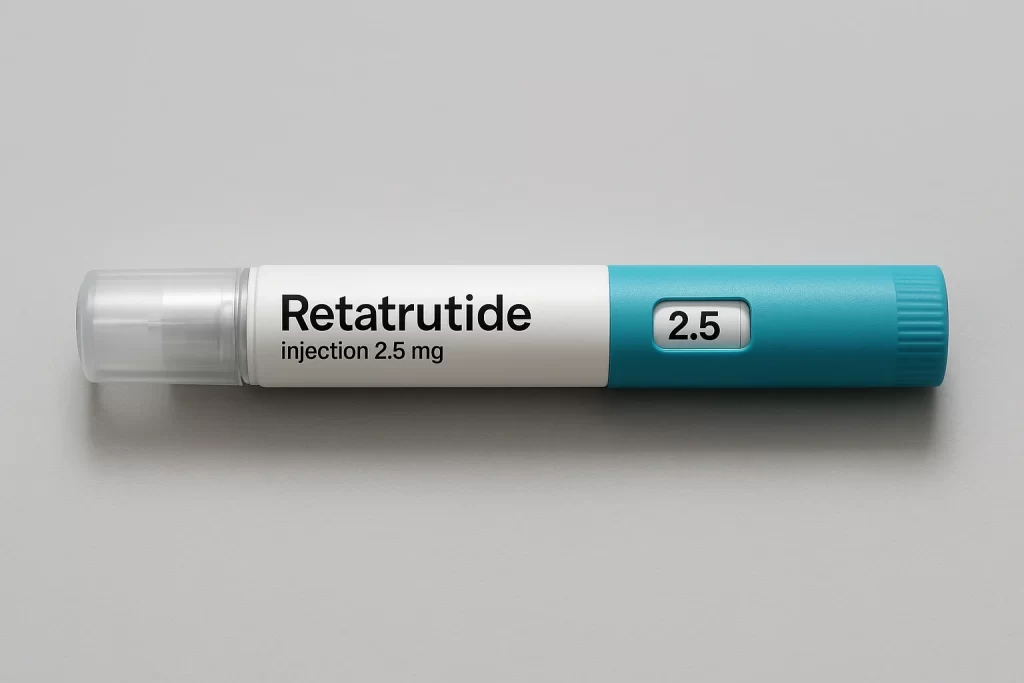
Retatrutide is a metabolic research peptide designed to influence multiple hormone systems involved in appetite regulation, insulin sensitivity, and energy expenditure. Unlike single-target compounds, it acts on three pathways at the same time, allowing for a more comprehensive effect on body weight and metabolic function.
Its primary actions include reducing hunger signals, improving blood glucose control, increasing fat utilization, and supporting lean tissue during calorie restriction. This combined mechanism is what differentiates Retatrutide from earlier weight-management agents.
The effects of Retatrutide typically develop gradually as the body adapts.
Initial phase:
Appetite suppression is often noticeable, and food intake naturally decreases. Some individuals may experience mild gastrointestinal discomfort or fatigue during this adjustment period.
Progressive phase:
Fat loss becomes more apparent, insulin regulation improves, and energy levels may stabilize. Hunger tends to be more controlled rather than completely absent.
Later phase:
The body shows continued changes in composition, with reduced fat mass and improved metabolic efficiency when nutrition and activity are properly managed.
Progress is best evaluated using physical measurements, body composition indicators, and overall well-being rather than weight alone.
Retatrutide is generally administered via a once-weekly subcutaneous injection.
Educational dosing principles include:
Beginning with a low dose
Gradual increases based on tolerance
Maintaining consistent administration timing
Rotating injection sites to reduce irritation
Slow dose escalation helps minimize side effects and supports long-term consistency.
Because appetite may be reduced, intentional nutrition is essential.
Key nutritional focuses:
Adequate protein intake to preserve muscle tissue
Balanced carbohydrates to support energy and training
Moderate dietary fats for hormonal function
Hydration and electrolyte intake should be prioritized.
Prolonged undereating should be avoided to prevent metabolic slowdown.
Physical Activity and Training
Regular physical activity supports metabolic health and muscle retention.
General recommendations include:
Resistance training multiple times per week
Emphasis on compound movements
Moderate cardiovascular activity
Daily low-intensity movement, such as walking
Training volume should align with energy intake and recovery capacity to avoid excessive fatigue.